
No Carroll 72 Hour Feed
New River Valley Regional Jail does not offer an official button, filter, or separate URL for a rolling Carroll County 72 hour release list. The Carroll County Sheriff's Office also does not publish such a feed. The working source is the NRVRJ released-inclusive lookup, where a user searches a known name and date of birth or an exact identifier. It is a person-query interface, not a reverse-chronological ledger.
The three-day question still has a sound workflow. Define the period, locate every known booking episode, record any release label and date that the live detail displays, and compare those entries with the Carroll court case and direct jail confirmation. This is especially important when a release and a new detention occur close together. The latest event may not describe the full three-day history.
Check Carroll Three-Day Releases
Use a fixed start and end time before searching. A vague phrase such as “over the weekend” can cover different periods for different people. Gather the full name, date of birth, approximate arrest date, committing agency, case number, and any booking or state identifier. Then work across each Carroll County booking episode rather than stopping at the first matching name.
- Open the NRVRJ lookup and select Include released inmates. Search by full name and date of birth or by an exact supported identifier.
- Match each result to Carroll through the booking date, committing agency, charge, court, and case number that are actually displayed.
- Record the source, time accessed, spelling, query mode, released-control state, and the exact status or date label. Repeat for every episode within the claimed span.
- Call NRVRJ at 540-643-2000 and ask whether each episode ended, at what date and time, and whether the person entered the community or another authority's custody.
- Compare the jail event with the Carroll docket and any VINE timestamp. Use VADOC, BOP, or ICE only when a transfer clue points to that system.
- If the evidence remains incomplete, request the existing release or transfer entry for the narrow three-day range.
For a check confined to one day, use the Carroll Jail Releases: 24 Hours process. Do not infer that an episode belongs within either window unless a dated source supports it.
Carroll 72 Hour Search Fields
The official interface verifies its inputs, not a universal set of result fields. Name, date of birth, and several identifiers can retrieve a past episode when the released control is selected. A live detail may expose status, dates, charge, bond, agency, court, or a photo, but each field must be confirmed on that result before it is described as present.
| Search element | Use in a three-day check |
|---|---|
| First and last name | Finds candidate records but may return namesakes or more than one episode. |
| Date of birth | Narrows identity when a name alone is not reliable. |
| Booking Number (PIN) | Targets one regional-jail booking directly. |
| PCP, SID, CID, FBI, or ICE number | Uses an alternate official identifier tied to the person. |
| Include released inmates | Adds episodes that are no longer part of the current-custody view. |
| Displayed release status and date | Must be copied from the live detail and checked against the facility and episode. |
The official NRVRJ page visually confirms both released-record controls.
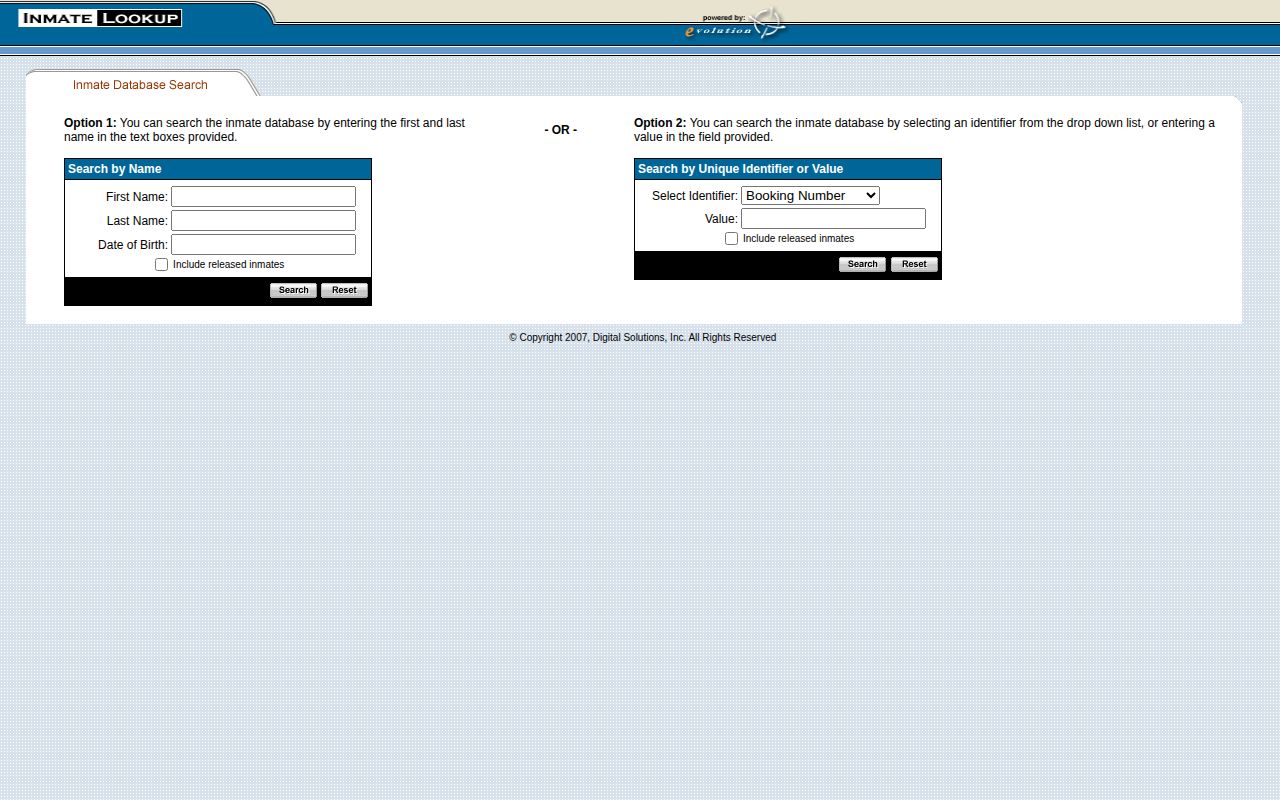
The form proves that a known person can be searched with released records included. It does not depict a three-day list or establish archive completeness.
Note: Record “not displayed” for a missing result field instead of importing a value from a third-party page.
Carroll Weekend Release Checks
A three-day span can expose data lag that is hard to see in a same-day check. A VINE alert, jail entry, and court event may carry different timestamps because they record different acts and may update on different schedules. Compare the event label and source rather than sorting all dates as if they came from one system. VADOC states that its locator updates daily; NRVRJ publishes no comparable cadence for its released search.
No official NRVRJ source identifies a weekend or holiday release-processing rule, public release exit, waiting area, or transit stop. Do not infer a time or meeting place from another Virginia jail. Families should call NRVRJ for current logistics. State-prison transportation practices belong only to VADOC releases and must not be applied to a Dublin regional-jail departure.
A holiday can also affect office access without changing the legal release event. The court order may exist before a public interface reflects it, and a later entry may appear after custody changed. If quick sources conflict, describe the result as not yet reconciled. Direct jail confirmation and a dated record remain the safe endpoint.
Carroll Released Search Is Person-Based
NRVRJ's embedded lookup includes released records in both name and identifier modes, which is a useful local feature. Yet it cannot be turned into a feed by changing the query wording. It does not claim to return every Carroll County departure during a chosen interval, and it publishes no archival cutoff. The current embedded URL should be used instead of a stale separate lookup-host link.
This person-based design has practical consequences. A broad surname search can reach a configured result limit, so date of birth or a precise identifier improves the match. The user must also confirm that Carroll was the committing jurisdiction, because NRVRJ serves a regional authority with several member localities. A matching person held for another county is not a Carroll release record.
Absence remains ambiguous. It may reflect spelling, a cleared checkbox, public-interface retention, data lag, another facility, a restricted record, or no booking at all. The correct next step is another official channel, not a claim that the person was never held or is now free.
Note: One release followed by return to custody creates two events; the most recent status does not erase the earlier episode within the three-day window.
Reconcile Carroll Release Systems
Each official system answers a different part of the three-day question. NRVRJ identifies the regional booking episode. Carroll courts explain bond, dismissal, sentence, or another order. Virginia VINE reports custody-change events from a participating agency. VADOC shows current state custody or supervision. Federal systems should enter the search only when the record provides a federal or immigration clue.
| Three-day finding | What remains to verify |
|---|---|
| NRVRJ marks the episode released | Whether departure meant community release or transfer to another authority. |
| VADOC shows a state facility | The person left NRVRJ but continues in state confinement. |
| VADOC shows District 16 | The live state supervision status and responsible office. |
| VINE sends release then return | Both custody episodes and the latest reporting-agency status. |
| Court matter is dismissed | Any other case, hold, or unresolved jail-data issue. |
| No result in an ICE search | Immigration custody remains unresolved because the locator is not a history archive. |
For one named person, the Carroll County released inmate search brings these jurisdiction branches together. Two concordant official sources are preferable. Formal proof should come from the record-holding office or a certified court record.
Request Carroll Three-Day Records
A narrow records request is the fallback when no public result settles the 72-hour question. Ask NRVRJ for an existing release-log entry if one is kept, along with the booking record, actual departure date and time, release-versus-transfer category, and receiving agency if disclosable. Give the full legal name, date of birth, booking number, Carroll as the committing jurisdiction, and the exact date range. An agency need not create a custom report that does not exist.
NRVRJ has no published release-record fee schedule. Request electronic copies and an estimate. Virginia FOIA provides a five-working-day response framework, but that clock permits several forms of response and is not a guarantee of immediate production. A withholding should identify the subject and statutory authority; a no-record response should be kept with any referral.
Route the request by record type. NRVRJ holds the regional booking and departure entry. The Carroll sheriff may hold the local arrest, transport, or lockup record. The filing clerk holds the court order. VADOC holds state correctional records after a transfer. Separating the requests avoids asking one office for documents it did not create.
Do not ask the jail to certify that no other authority held the person. Ask what happened to its own episode and whether its record names a destination. That focused answer supports an accurate three-day timeline.